

On the surface, self-hosted email campaigns seem like the ultimate savings. No subscriptions. No being tied to Sender or Kit. Just you, your server, and unlimited sending power, right?
Well, not exactly.
Running campaigns from your own server is like buying a used car. The price is low, but after fuel, repairs, insurance, and the occasional “why won’t this start?” moment, the savings fade.
That’s the catch with self-hosting: hidden costs. From server fees to IP warm-ups to fighting spam filters like email Mortal Kombat, the “cheap” option gets pricey fast.
But here’s the twist: sometimes it is worth it. For the right business, self-hosting can save money, offer full control, and keep your data safe from third-party platforms. The trick is knowing when it makes sense, and when it’s just better to stick with a SaaS email platform.
In this post, I will show you the real costs of self-hosted email campaigns, where people often get blindsided, and the few scenarios where rolling your own mail server might actually be the smartest play. I’ll also show you the tools you can use (including open-source and one-time-payment options), and most importantly, when it might actually be worth it.
What is a Self-Hosted Email Campaign?
A self-hosted email campaign simply means running your email marketing from your own server instead of paying for a third-party service like Mailerlite, Kit, or Mailchimp.
Here’s how it works:
- You set up your own SMTP server (think of it as the “post office” that sends your emails).
- You install software like MailWizz, Mautic, or Relayzo to manage subscribers, design emails, and schedule campaigns.
- Instead of paying monthly fees to a SaaS tool, you cover server costs and handle the sending yourself.
You control your email campaign and achieve cost savings. You’re not limited by pricing tiers, subscriber caps, or strict sending limits. If you’ve got the technical chops, you can send millions of emails at a fraction of the SaaS cost. But you also take on all the responsibilities SaaS platforms normally handle for you:
- Deliverability (making sure your emails land in inboxes, not spam).
- Security (protecting your data and subscribers).
- Maintenance (keeping your server and software running smoothly).
A self-hosted email campaign gives you freedom, but with homework. You get full control over your campaigns, but you also wear the hats of sender, IT manager, and spam-fighter all at once.
Why People Choose to Self-Host their Email Campaigns
If self-hosted email campaigns are extra work, why do people still choose them? The honest answer is that the benefits are appealing. For many businesses, the benefits are hard to ignore.
Here are the reasons most people self-host their email marketing software
- No Monthly Subscriptions
This is the main appeal. With SaaS tools, costs add up, $50 here, $200 there, until email is pricier than office rent. Self-hosting means you only pay for the server, domain, and maybe SMTP relay.
- Full Control Over Data
Privacy matters. Some companies don’t want subscriber lists sitting on someone else’s servers. With self-hosting, you own the data, the infrastructure, and the logs. Nothing gets shared unless you say so.
- Freedom From Sending Limits
Most paid email platforms usually cap how many emails you can send per month. If you exceed that, you either upgrade to a pricier plan or stop sending. Self-hosting removes that limitation. If your server can handle it, you can send as much as you want.
- Scalability on your Terms
You don’t have to jump from 10,000 emails to 1 million by upgrading to an expensive plan. Just boost your server or add another. Growth depends on you, not pricing tiers.
- Customisation and Flexibility
Want to tinker with delivery rules, automate workflows, or integrate with your existing tools? Self-hosted email marketing tools allow you to customise the software as needed. SaaS tools often limit you to the features they offer.
The Hidden Costs Nobody Talks About
At first glance, self-hosted email campaigns look like a one-time setup with endless sending power. But under the hood, some costs rarely get mentioned in the sales pitch.
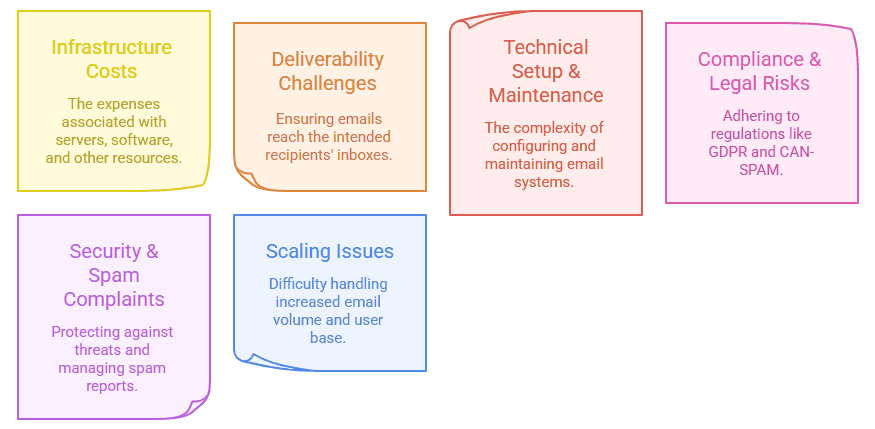
Here are costs you may not know about self-hosting your campaign:
- Infrastructure Costs
Your emails need a home. That means you need a VPS or dedicated server. You can get a reliable VPS or dedicated server on Contabo from $5/month, depending on your sending volume. You also need a domain name to access your software online rather than using an IP address. You can also pay for extra add-ons, such as backups, monitoring tools, or DDoS protection.
On paper, these seem small, but they add up quickly. Sending from your laptop won’t cut it; you need a serious and reliable hosting server to handle thousands (or millions) of emails reliably.
- Deliverability Challenges
This is the dealbreaker for most beginners. It’s not enough to send emails; they have to land in the inbox. That’s where the real fight begins:
IP warm-up: Like building credit history, new IPs have zero reputation. If you blast out 50,000 emails on day one, you’ll get flagged as a spammer.
Spam filters: Gmail, Outlook, and Yahoo constantly update their filters. If you misconfigure one setting, your campaigns will go straight to spam city.
Blacklist monitoring: You need to monitor your campaign to avoid ending up on a blacklist. Your emails stop reaching inboxes altogether. Getting delisted is no fun, and sometimes it’s impossible.
Paid email marketing tools help you with deliverability. While you do it yourself when you self-host your email marketing tool.
- Technical Setup & Maintenance
Running your own server isn’t plug-and-play. You’ll need to configure DNS records (SPF, DKIM, DMARC); it's your email ID, without which you won’t be able to send email out. You will also need to install and update email marketing software such as MailWizz, Mautic, and Swift Send.
You will also need to patch servers, apply security updates, and troubleshoot crashes.
- Compliance & Legal Risks
Email laws aren’t suggestions; they’re strict rules with hefty penalties. Self-hosting means you are responsible for compliance with: GDPR (Europe), CAN-SPAM (USA), PECR (UK), and NPDR (Nigeria)
If you slip up with consent, unsubscribe links, or data handling, you could be staring at a fine. Cloud-based email marketing tools usually bake compliance features into their platforms, but when you self-host, it’s on you.
- Security & Spam Complaints
Hackers love poorly configured mail servers. One slip, and spammers hijack your system to send junk under your name. And if there are too many spam complaints, ISPs like Gmail and Outlook will throttle or block your IP from sending.
You’ll need to keep firewalls, SSL certificates, and monitoring systems in place to stay safe using your self-hosted email marketing tool.
- Scaling Issues
Sure, sending a few thousand emails isn’t too bad. But what about when your email list grows bigger than expected? Processing bounces, handling feedback loops, and managing unsubscribes becomes a full-time job. You may need multiple servers, IPs, and load-balancing. Your deliverability will dip if you don’t scale as your list grows.
When Self-Hosting Might Actually Be Worth It
Self-hosting isn’t a magic way to get free email, but for some businesses, running campaigns on your own server can be smart.
Here’s when it might actually be worth the stress:
- High-Volume Senders
If you’re sending hundreds of thousands or even millions of emails each month, cloud-based email marketing tools can get painfully expensive. For example, Sender or MailerLite might charge thousands per month at that scale. A well-managed self-hosted setup can bring those costs down to a fraction, as long as you have the experience or team to keep it running smoothly.
- Teams With Strong Technical Expertise
If you’ve got in-house IT teams that know their way around DNS records (the settings controlling email routing), IP warm-up schedules (gradually increasing email volume to build sender reputation), and server security, you can self-host email marketing. Instead of outsourcing deliverability to a SaaS (Software as a Service) tool, your team can handle the entire process.
- Businesses With Strict Data Privacy Needs
Some industries (finance, healthcare, government) simply can’t afford to hand subscriber data over to a third-party email marketing provider. Self-hosting keeps all your email lists, logs, and campaign data within your own infrastructure, giving you full ownership and reducing compliance concerns related to data sharing.
- Custom Workflows and Integrations
If you need an email system that integrates seamlessly with your existing tech stack, such as CRM, ERP, or a custom-built app, self-hosted software like Billionmail, MailWizz, Acelle, or Relayzo provides the flexibility to build exactly what you want. With most cloud-based email marketing tools, you’re often stuck with whatever integrations they offer, and many advanced ones live behind higher-tier paywalls.
- Long-Term Cost Efficiency
If you’re consistent, technical, and patient, the upfront headaches eventually pay off. Once your system is warmed up, stable, and scaled, you can save a fortune compared to SaaS pricing. For high-volume marketers who play the long game, that can mean significant savings over the years.
Self-Hosted Email vs Cloud-based Email Platforms
Before you decide which road to take, it helps to compare self-hosted email campaigns to the big Cloud-based email marketing platforms such as Mailchimp or Kit. Both options can get your emails into inboxes, but the experience is very different.
Here’s how they compare side by side:
| Feature | Self-Hosted Email Software | Paid Email Platforms |
|---|---|---|
| Upfront Cost | Low, just a server and software | start free or low monthly fee |
| Ongoing Cost | Server fees & maintenance time | Predictable monthly subscription |
| Setup Difficulty | High, requires technical skills | Low, ready to use out of the box |
| Control & Ownership | Full control over data and logs | You follow the provider’s rules |
| Security | Must secure your own system | Provider handles most security |
| Customization | Can integrate with any tool | Limited to provider’s integrations |
| Deliverability | You manage everything | Deliverability manage for you |
| Scalability | Flexible but technical | Just upgrade to a higher plan |
Still Want to Self-Host your Email Campaign?
Alright, let’s be honest, self-hosting an email campaign isn’t easy. Between DNS records, server maintenance, and inbox placement, it can feel like a difficult task. But if you’re still determined to go down this road, the good news is you don’t have to build everything from scratch.
There are tools built specifically to take some of the stress out of running your own email campaigns. They won’t eliminate every challenge, but they’ll save you countless hours and give you features that rival big paid platforms.
If you want to self-host your email campaign, these tools will make life much easier. They will give you dashboards, automation, and deliverability features that would otherwise take months to code yourself. While they don’t eliminate all the risks of self-hosting, they do turn it from “impossible” into “possible.”
Let’s look at a few of the most popular options:
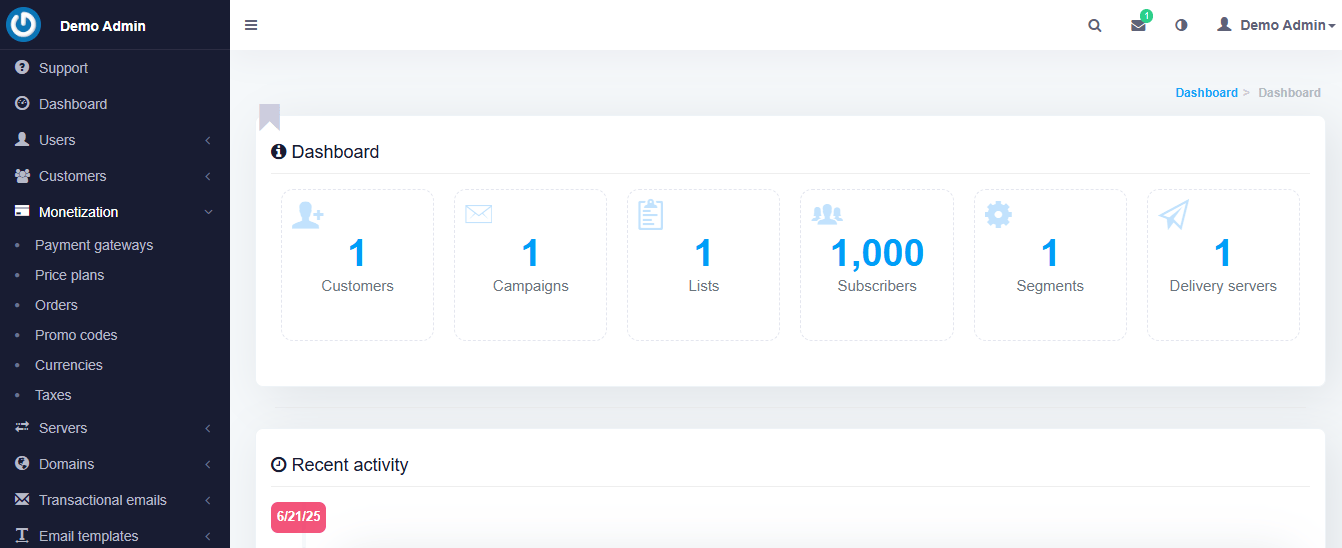
MailWizz is a commercial, one-time purchase email marketing app that runs on your own server. You buy MailWizz once for just $86, install it on your own server, and from there, you can send unlimited emails without worrying about monthly fees piling up. That’s one of its biggest selling points. You’re not punished for growing your list. The dashboard is straightforward, to set up campaigns, manage your subscribers, and check reports without feeling overwhelmed. Another advantage is flexibility; MailWizz connects with multiple SMTP providers, such as Amazon SES, SendGrid, or your own mail server.
- Create autoresponders and drip campaigns.
- Manage subscribers, lists, and campaigns from a clean dashboard.
- Handle bounces, complaints, and unsubscribes automatically.
- Add multiple SMTP servers or delivery channels for better deliverability.
It’s beginner-friendly compared to coding things from scratch, making it a favourite among digital marketers who want the benefits of self-hosting without touching a line of code.
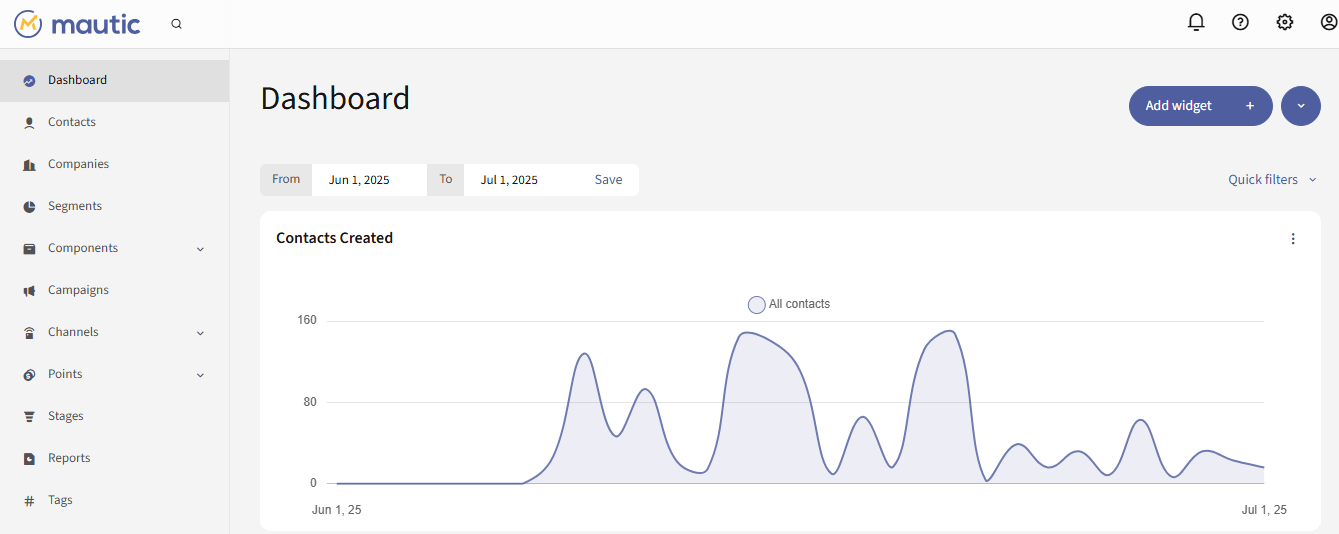
Mautic is the powerhouse of open-source marketing automation. While MailWizz focuses on bulk email campaigns, Mautic goes further with automation, CRM features, and website tracking. You can set up welcome emails, have automatic follow-ups if emails aren’t opened, and assign lead scores so your sales team understands who’s engaged. Mautic is open-source and free to use, but you do need to handle the setup and ongoing management yourself.
Getting Mautic running can require some technical know-how and reliable hosting, but if you want robust marketing automation without enterprise costs, it stands out as a strong option.
- Advanced segmentation and targeting.
- Behaviour-driven automation (send emails based on subscriber actions).
- Integration with CRMs, websites, and e-commerce systems.
- Multi-channel outreach (emails, SMS, social media, web notifications).
Though Mautic is more complex to set up and maintain. But if you need an all-in-one marketing automation under your control, no tools come close to Mautic.
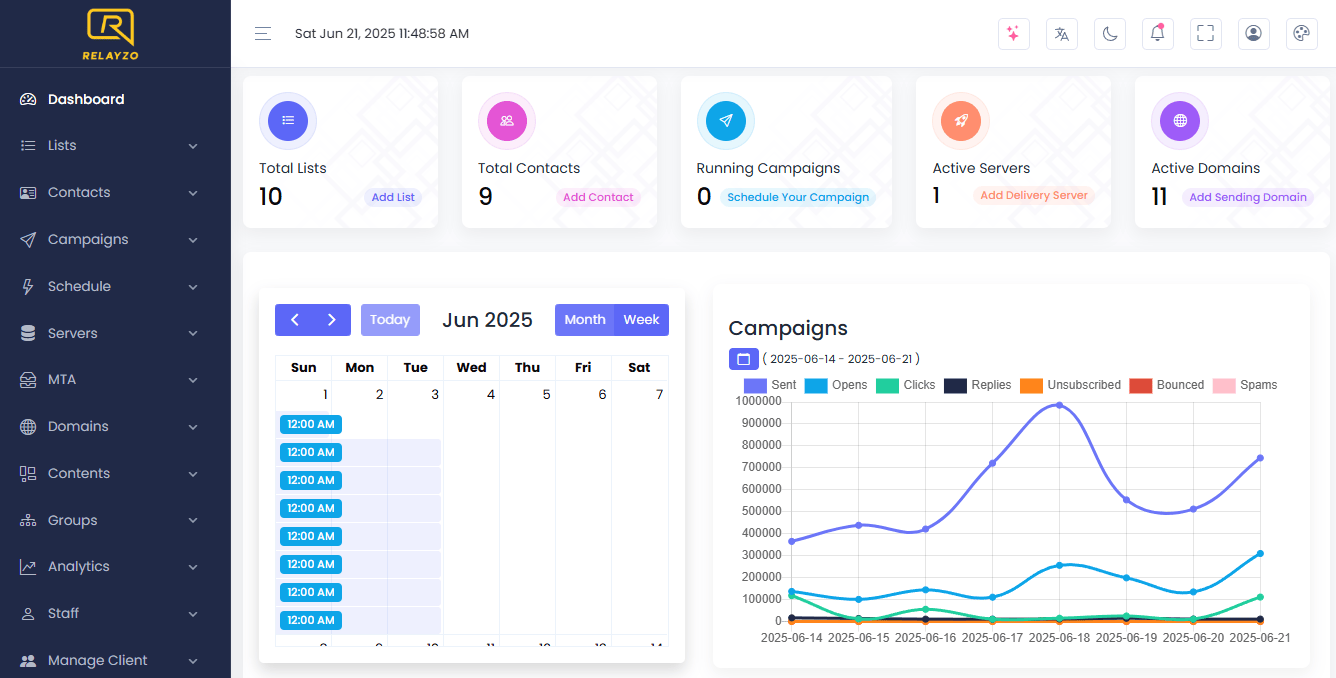
Relayzo is a one-time payment, self-hosted email marketing platform built for businesses that want the flexibility of SaaS but the customisation of self-hosting. It provides you with tools to monitor and improve inbox placement, reducing the chances of ending up in the spam folder. With a modern, intuitive interface, Relayzo offers an accessible option for businesses that want reliable sending and simplicity without deliverability worries.
With just $37 one-time payment, you will be able to:
- Create and send newsletters and campaigns from an intuitive interface.
- Use powerful automation and list management tools.
- Access analytics to monitor opens, clicks, and engagement.
- Connect your own SMTP server.
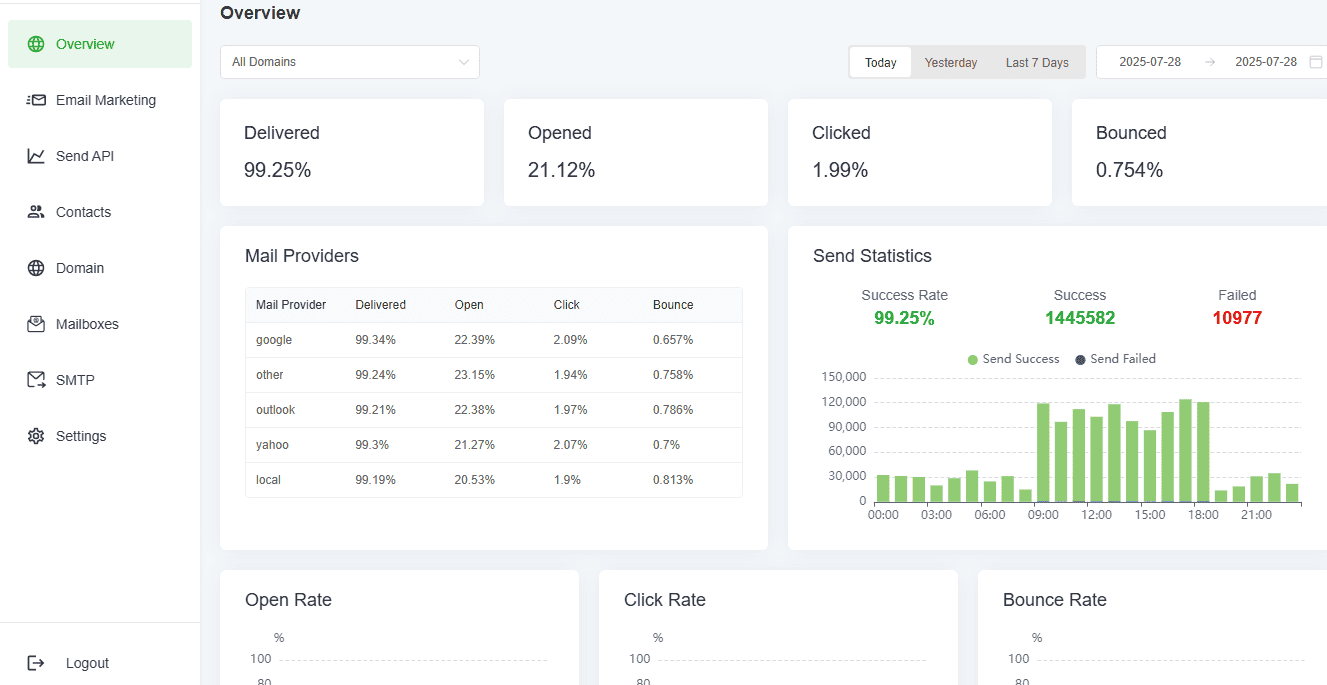
Billionmail is a high-performance self-hosted email marketing software designed for serious senders. It’s built to handle high-volume sending and comes with automation tools that let you set up sequences like welcome emails, reminders, or product promotions without having to lift a finger each time.
Its highlights include:
- Support for very large subscriber lists.
- Built-in bounce management and complaint handling.
- Multiple sending engines for reliability.
- Advanced tracking for opens, clicks, and conversions.
It’s not the lightest tool to set up, but for businesses sending at scale, Billionmail can handle the load while keeping costs predictable.
Final Thoughts
Running self-hosted email campaigns is a bit like fixing your own car. Sure, you’ll save money on mechanics, and you’ll know every nut and bolt in the car. But you’ll also spend weekends fixing the engine, grease on your hands, praying it starts on Monday.
The appeal is obvious: no subscriptions, total control, and room to scale however you want. But the hidden costs, servers, deliverability headaches, compliance risks, and time are very real. For many businesses, those “savings” quickly disappear once the maintenance bills roll in.
So, is it worth it?
- Yes, if you’re sending huge volumes, have a technical team, or need strict control over your data.
- No, if you’re a solo marketer, small business, or anyone who just wants to hit “send” and trust emails will land.
At the end of the day, it’s about your choice and strength. Do you want convenience, or control? Predictable costs, or potential savings with extra responsibility?
My advice: weigh your email sending volume, budget, and technical experience before going for self-hosted email marketing software. Sometimes the cheapest option on paper turns out to be the most expensive in practice.
Frequently Asked Questions (FAQs)
Got questions about self-hosted email campaigns? You’re not alone; these are the same things most people ask when weighing the pros and cons. To save you some time, here are quick answers to the most common questions people ask about self-hosting an email campaign.



0 Comments